

12 Charities Who Will Pick Up Your Donations for Free
August 15, 2023
The Best Veterans Charities To Donate Your Time and Money To
August 25, 2023
Whether you’re getting ready to move or simply need a new way to tackle the growing pile of books on your shelf, you need to know how to pack all your books safely and efficiently. The best way to pack books will depend on the types of books you’re moving, how long you’re storing them, and which types of packing materials you prefer.
Books can be a challenge when moving, considering their weight. At Easy Donation Pickup, we help take unwanted items off your hands to help American veterans in need and their families. Using our tips below, you can streamline your packing process while protecting your favorite books from damage during transport.
How To Organize Before Packing
Books are heavy and take up a lot of space. Before we dive into packing tips, you need to get organized and declutter your collection so you can maximize space. We recommend the following organizational tips:
- Sell or donate unwanted books: Parting with any book can be hard if you’re a book lover. Consider which books you never enjoyed, don’t plan on finishing, or hardly remember reading. You likely have old textbooks sitting around from school days gone by collecting dust that can go to better use at a donation center or local library.
- Remove duplicate copies: You may have special editions, hard copies, and paperbacks of your favorite books that you’ve collected over the years. Do you really need multiple versions of the same text? Consider which one is your favorite, then donate the others.
- Separate paperbacks and hardcovers: Once you’ve narrowed your pile, you can begin sorting. The best way to maximize space when packing books is by separating paperbacks and hardcovers. We’ll discuss tips on packing each type below.
- Sort by size: Packing similar-sized books together will help you take advantage of every square inch of your box. Sort your “keep” pile by size.
- Sort by author, genre, or topic: Consider one final sorting round based on how you list books in your personal library. If you like to organize things by author, genre, or topic, keep the same method going in your boxes for easier unpacking in the future.
- Separate fragile books: As you’re sorting through books, pull out any older, more fragile copies or antique books, as they will require special attention during the packing process. We will discuss tips on packing antique books below.
- Prepare your packing supplies: Finally, gather your packing supplies. You will need a range of sturdy boxes, packing tape, wrapping paper, and markers. You may also use luggage and bubble wrap for extra security.
If you’re interested in donating some of your books, we can help! You can schedule a pickup with Easy Donation Pickup to help local veterans in need with your book donation.
Using Suitcases and Luggage: The Best Way To Pack Books for Moving
Sometimes the best way to pack books for moving is to simply use the luggage you already have. Suitcases provide excellent durability and strength, so you don’t need to worry about them opening up or tearing due to weight. If you already need to pack your luggage for the move, consider filling it with your library.
Keep in mind that luggage made with softer materials can bend, which may cause the books inside to bend. Because of this, you will need to use extra caution during transport. Suitcases may provide excellent convenience, given the rolling wheels and handles, though you will need to pack them carefully.
Hard-shell luggage works best for packing books as it offers ample space inside and ideal exterior durability. This way, you can still enjoy all of the convenience of luggage without the risk of your books bending.
Packing Techniques: The Best Way To Pack Books in Boxes Safely
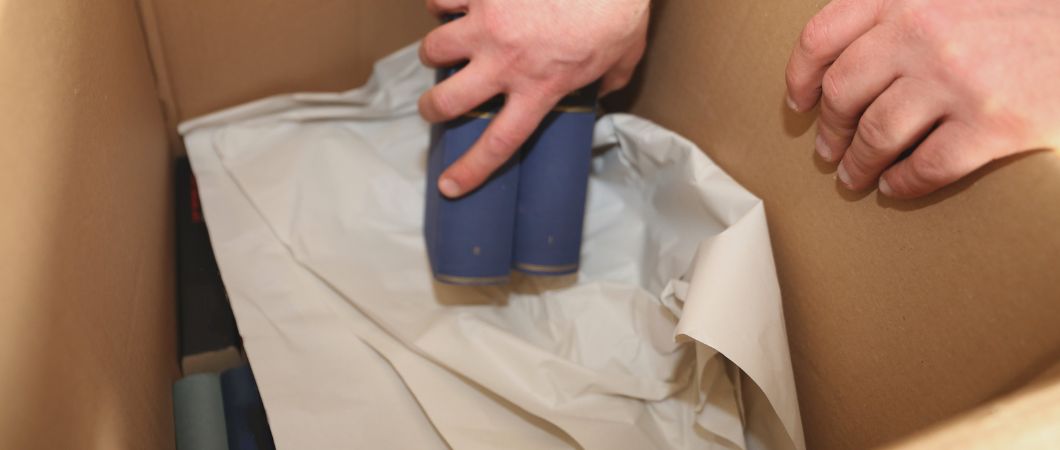
Once organized, you can begin packing your books. Use our steps below to master the best way to pack books safely:
- Choose the right box: Smaller and medium-sized boxes work best for packing books, as larger options packed to capacity typically cannot handle the weight. If you only have large boxes, you will need to pack them about two-thirds full so they don’t cave in.
- Seal the box from the bottom: Prepare each book box by applying packing tape along the interior and exterior bottom seams for extra security. The added tape will ensure that the bottom doesn’t fall through from the weight.
- Pack according to your piles: Now you can begin filling each box according to your book piles. You can protect fragile books by wrapping them in wrapping paper or bubble wrap.
- Use paper or bubble wrap to fill the empty space: You will likely have extra space in your box on the sides or between stacks. Extra space will cause the stacks to slide around during transport, which could harm the books. Fill this space with acid-free tissue paper or bubble wrap so everything fits tightly.
Flat or Upright?
You should pack hardcover books upright, just as you would stack them on your shelf. Place the hard spine up against the sidewall of the box to keep everything secure.
Next, you can pack your paperbacks by stacking them flat in piles based on size. Paperback books have less physical integrity, so they may suffer damage if you attempt to stack them upright.
You should never pack paperback or hardcover books spine-side down, as this can harm the book. A book’s structural integrity relies on its spine, so you don’t want to place too much pressure on this area.
Organizing by Size
Organizing by size allows you to stack books together with similar dimensions so you don’t accidentally create wobbling pyramids within your box. Similar-sized books will not only maximize space but also reduce sliding during transit. The tighter the fit you can create with similar-sized books, the safer your books will arrive at your new destination.
You typically don’t need to worry about the book’s depth. Rather, consider the book’s height and width when sorting your collection by size.
Securing Boxes
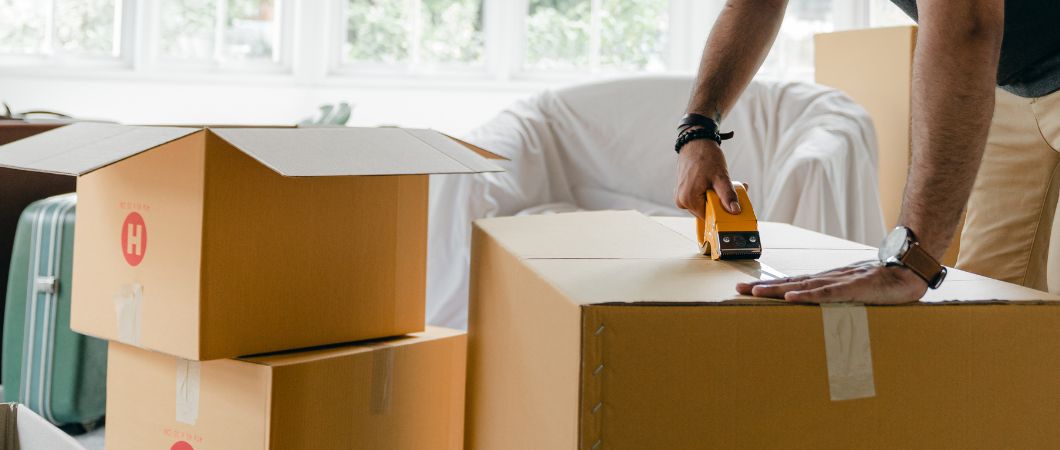
Now that you’ve learned the best way to pack books in boxes, let’s move on to securing your boxes so they make it to your new home or storage facility safely. We recommend the following tips:
- Secure each box with packing tape: After packing each box and filling the cracks with paper or bubble wrap, you can secure the lids using packing tape. Be sure to take just as much precaution when taping the top as you did on the bottom, just in case an accidental tumble occurs.
- Label boxes: Label your boxes according to their sorted piles. For example, you could write “small paperbacks; author last name A-D.” You can do this before or after taping, as long as you remember what you put inside the box!
- Pack in your vehicle according to weight: Once you’re ready to load up your moving truck or vehicle, be sure to place the heaviest items down first so nothing crushes your book boxes. Pack items tightly to avoid sliding during transit.
- Tie items down if necessary: If you don’t have tightly packed cargo, consider tying items down using bungee cords or ropes to secure your boxes.
- Warn your movers ahead of time: When working with movers, you may want to warn them in advance about your most delicate items, including your books, so they treat them with extra care. You can even tell them where and how you want them packed in the truck.
Shipping Tips
Shipping your collection may be necessary for overseas moves or shipments to a friend. Consider the following tips when shipping books:
- Consider the costs: Book shipments come at an extraordinarily high cost due to their weight. Donating part of your collection can help you save money on your move. Remember, you can always buy used copies or download digital versions after you move.
- Take inventory of your collection first: After narrowing your collection, be sure to take inventory of everything before shipping your box. If you lose a box, you will at least have a list of your library, so you know what you’re missing.
- Add insurance to your shipment: While you may not want to entertain the idea of losing your precious collection, it can happen. We recommend insuring your shipment so that if it gets lost in transit, you’ll at least receive a refund to help you rebuild your library.
Protecting Antique Books
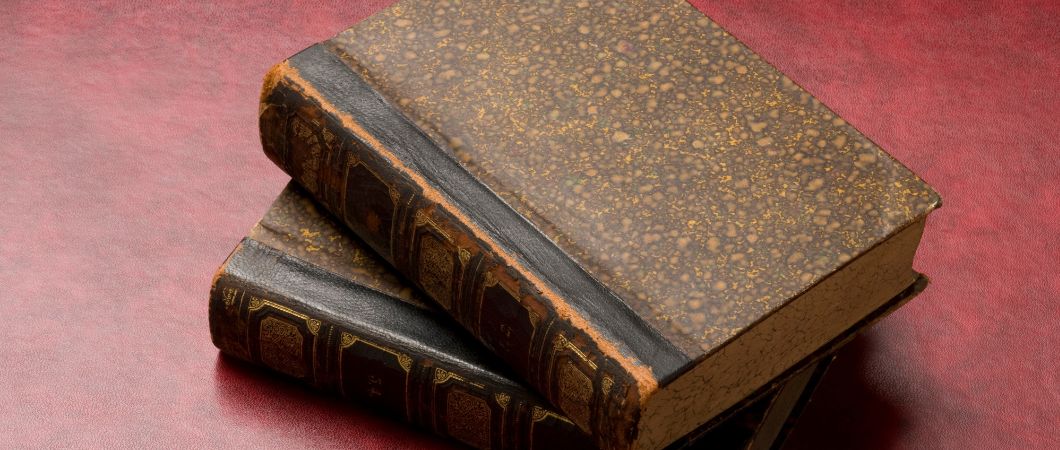
Rare, delicate, and antique books require extra care when packing or storing. If you want to store books for a long period of time or transport your antique collection, use our tips below.
Antique Book Preservation
Antique and delicate book preservation revolves around minimizing exposure to moisture and sunlight to keep the pages intact and in good shape. Try the following tips:
- Store books out of sunlight: A sunlit bookshelf may seem gorgeous in theory, but it can damage your antique books. Either store your collection in a container or keep them on shelves in a darker room.
- Keep your collection in a dry area: Moisture can ruin any book, especially an antique one. Be sure to keep your collection in a dry area.
- Avoid handling the books: Flipping through antique books on a regular basis will put more wear and tear on the delicate spine.
- Dust the items regularly: If you’re keeping your antiques in an open-air location, be sure to dust them regularly, as pet dander, mites, and other pollutants can contribute to long-term material decay.
- Use acid-free containers: When storing antiques, be sure to use acid-free boxes to prevent damage.
- Rent a temperature-controlled storage unit: If you’re considering long-term storage, select a temperature-controlled unit, as extreme climates can cause excess wear and tear on the books.
- Wrap carefully: Individually wrapping antique books can help preserve them, though make sure you select the right type of acid-free wrapping.
- Don’t overpack: While you may want tight spaces for short-term moving storage, you need extra space for long-term storage so your books can have more airflow. Avoid overpacking so your antique books can have more room.
Pest and Environmental Protection
Pests can be a huge concern with long-term antique book storage. Moths, beetles, silverfish, and other insects can all destroy your collection without you even realizing it until you open the box a few years later.
While you can use basic preventive methods, like mothballs, the pesticides may harm your books as well. Instead, seek out more environmentally friendly solutions, like cedar chips, to deter pests.
Storing in a climate-controlled, dry, and darker environment, as discussed above, will also help keep your books safe. Be sure to check on the collection regularly so you can stay ahead of issues before they worsen.
The Best Way To Pack Books for Long-Term Storage
The best way to pack books for long-term storage is similar to how you would pack antique books:
- Choose acid-free cardboard boxes or plastic containers
- Remove all moisture before packing
- Leave space in each box so the books can get air
- Wrap delicate books carefully with acid-free wrapping paper
- Label boxes according to what’s inside
- Choose a temperature-controlled storage unit
- Check on your books regularly to ensure that they’re in good shape
Using PODS Containers

Portable on-demand storage (PODS) containers allow you to pack your items in a secure container that the company will pick up and deliver to your new property for you. You can use PODS containers for transporting your books during your move.
Narrowing Your Book Collection? We Make Donating Easy!
Now that you know the best way to pack books for storage or moving, it’s time to begin narrowing and organizing your collection. If you decide to donate a few of your books, we’re happy to help you relocate them to a home in need. Books are on our list of acceptable items!
At Easy Donation Pickup, we pick up your donation directly from your front door and use donations to help veterans and their families in need. Schedule your donation pickup today to support The National Veterans Foundation or call our team at 1 (855) 628-8387 with any questions.