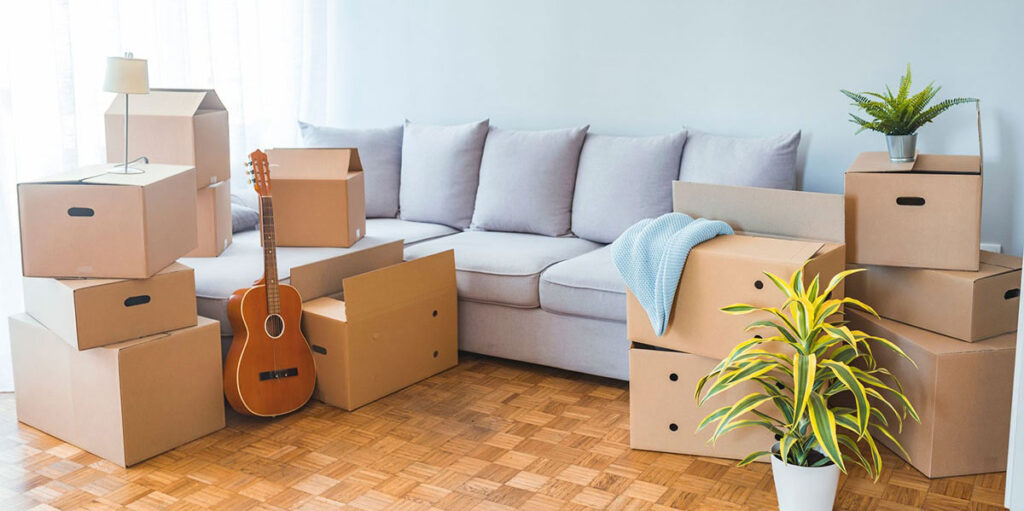
Are you moving? You are definitely not alone. Each year, a whopping 40 million people move in the United States alone. That is a lot of packing!
What is less well documented is how much stuff people lose every time they move. If you have ever gotten to the other end of a move and discovered only months afterwards that you are missing half your CD collection or a prized set of heirloom dishes or anything, really, this can feel really frustrating.
At least if you had noticed this right away, you might have had a chance of tracking down the missing items or claiming what didn’t arrive with the rest of your things.
The good news is that there are some easy ways you can pack to minimize your risk of losing anything else during your next move. In this post, learn seven trusted tips for organizing your belongings to avoid losing anything when you move.
Tip 1: Write it all down.
Whether you are moving a small apartment or a multi-room household, you definitely want to have a strong sense of what you own before you start moving it.
The truth is, any extra space inside a home tends to naturally attract clutter. So you may not even remember you own certain things until you start the moving process!
This is why you need to write it all down.
One easy way to do this is to work room by room. You may want to dedicate a small portable notebook specifically for this task. To keep track of items that have multiple pieces, such as silverware or dish sets, you will want to count the number of pieces and write that down before you pack them up.
You can follow all seven of the tips on this list for each room, moving to the next room only when you have completed all seven tips for the room you are working on.
Tip 2: Organize boxes by category.
This isn’t always the easiest part of the moving process. Odd-sized, fragile, valuable or very heavy items may need special handling or packaging.
But as best you are able, organize what goes into each box by its basic category. This will also help ease your stress on the other end as you go hunting through your boxes for the essentials you need right away.
Tip 3: Label each box clearly.
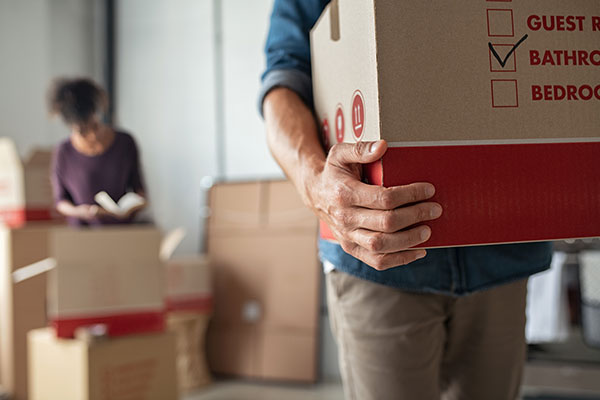
Labeling each box as clearly as you can with the basic theme of its contents will help you in two important ways: your movers will know which room it should go to and you will have a good idea what is inside and how urgently it needs to be unpacked.
One best practice to consider is to label the box in two ways. For the header, write the room in all capital letters (for example, “KITCHEN”).
Then underneath, you can write a basic description of the contents (such as “dishes”).
Writing this information on the side of each box, rather than on the top or the bottom, will make it easier for your movers and you to see at a glance what goes where.
Tip 4: Photo-document everything.
As you are packing each box, go ahead and take a quick photograph of the contents. Having photographs of what you own can be particularly helpful if things do go missing during your move (it happens) and you need to file an insurance claim.
Also be sure to read the fine print in your moving contract so you know what is required if you need to file a claim with the moving company for lost or damaged items.
Tip 5: Hand-move special items.
If you are using a professional moving company, your state may have certain restrictions or limitations on what can be moved. For example, in many cases cleaning supplies, alcohol, live plants and perishable foods will be on the no-move list.
These, along with high-value items, may require special handling. You may need to move these items yourself. Being proactive about choosing which items to transport yourself can also reduce the likelihood that the move will cause any damage or destruction to important belongings.
Tip 6: Donate what you don’t use before you move.
Movers typically charge by the hour and may also charge by weight. You can trim money off your moving expenses by offloading items you don’t use or don’t need before you move rather than afterwards.
Using a handy donation pickup service can get these items out of your home and off your moving checklist in short order, freeing up time and space to focus on moving the items you really need and use.
Tip 7: Be on hand to check everything on the other side.
Here again, it is important to thoroughly review the fine print in your moving contract to learn what your rights and responsibilities are on the other end of your move.
You may be required to visually review and sign off on your move as a part of the moving contract. If this is the case, it will be doubly important to keep an accurate tally of how many boxes were moved and what was in each one.
This way, you can at least do a visual head count of the boxes delivered and get a sense of whether anything is missing. This can be particularly useful when you are moving long distances and cannot be present during the entire moving process.
Ready to Donate Before Your Move? We Can Help!
Every donation pickup we make goes to serve and support the veterans who serve and support us all. We accept a wide variety of items for donation and do our utmost to make it simple and quick to donate your items.
All you need to do is call us at 855-628-8387 or visit us online to schedule your donation pickup. To learn more and prepare your items for donation, visit us at www.easydonationpickup.com.